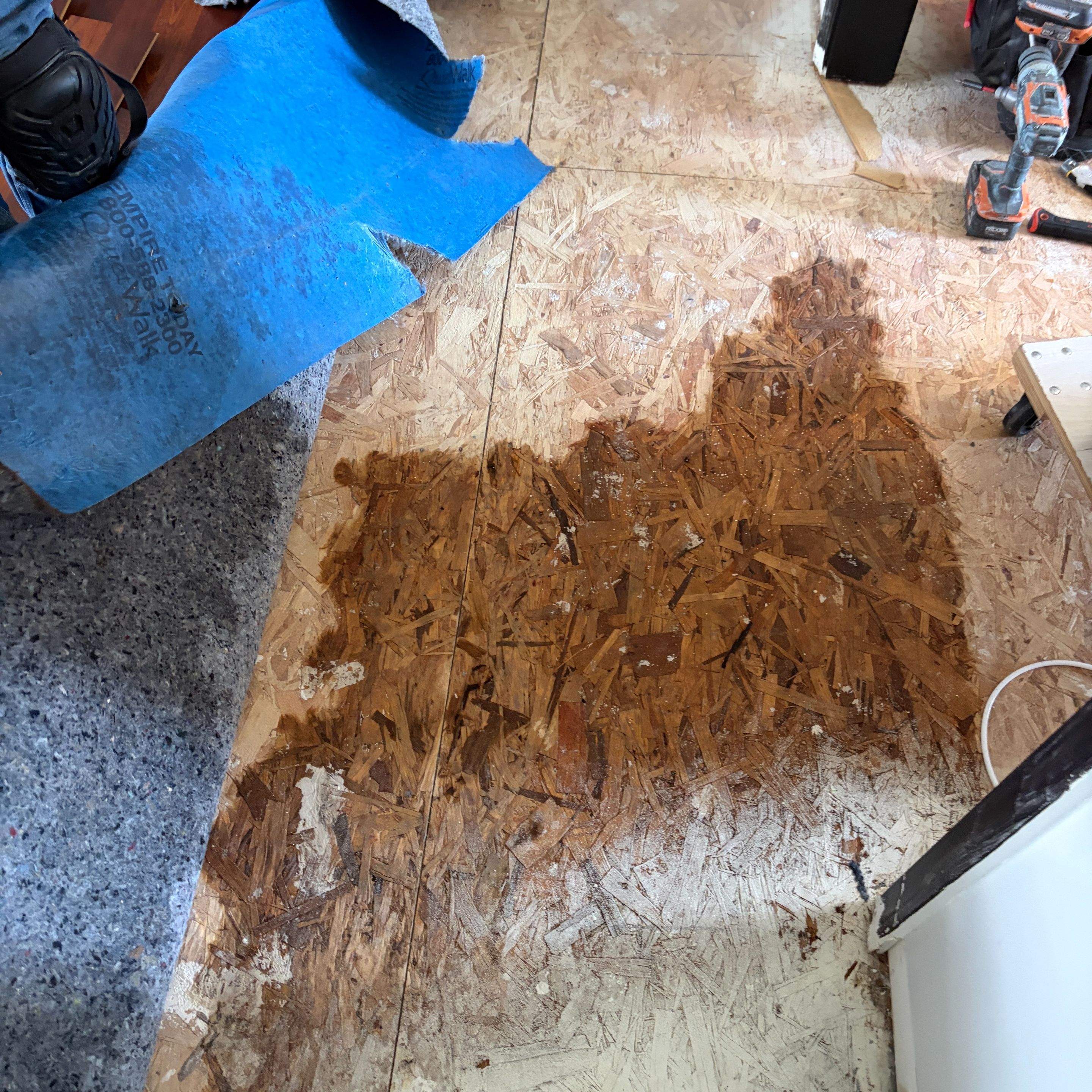
What Emergency Mitigation Actually Means
Mitigation is not the same as restoration. Restoration is the rebuild: new drywall, new flooring, paint, trim. Mitigation is everything that happens before that, and it is the phase your insurance carrier pays the most attention to. Under IICRC S500 guidelines, a qualified crew must categorize the water (Category 1 clean, Category 2 grey, or Category 3 black), classify the loss by how much porous material is wet, contain affected areas, extract standing water, set drying equipment based on cubic footage, and monitor moisture readings daily until materials hit dry standard. Skip any of those steps and you risk a denied claim or a secondary mold loss.
In Sand Creek Woods, the most common triggers we respond to are supply line failures under sinks, water heater tank ruptures, washing machine hose breaks, sump pump failures during spring storms, and frozen pipe bursts in January and February. Each one calls for the same core mitigation sequence, but the equipment count and drying time change based on saturation. A 40 gallon water heater that splits overnight will saturate a finished basement very differently than an ice maker line that drips for three days inside a kitchen cabinet. Category also shifts mid job sometimes, so we reassess before every drying day. That is where the comparison below becomes useful.
DIY Drying vs. Professional Mitigation: The Numbers That Matter
The table below is built from real jobs we have run in central Indiana on losses between 200 and 800 square feet of affected area. Treat it as a planning tool, not a quote. Every loss has variables, and we walk through them on site before we ever quote a number.
| Factor | DIY Approach (Fans and Towels) | Professional Mitigation (Sand Creek Woods Water Restoration) |
|---|---|---|
| Time to dry standard | 7 to 21 days, often incomplete | 3 to 5 days for Class 2 losses |
| Water extraction | Mop, shop vac, 5 to 15 gallons/hour | Truck mount or portable, 50 to 100 gallons/hour |
| Air movers used | 2 to 4 box fans, low static pressure | 1 air mover per 50 to 60 sq ft, axial and centrifugal |
| Dehumidification | Household unit, 30 to 50 pints/day | LGR commercial unit, 130 to 240 pints/day |
| Moisture monitoring | Visual and touch only | Penetrating and non-penetrating meters, daily logs |
| Containment | None, humidity spreads | 6 mil poly barriers, negative air where needed |
| Hidden moisture detection | Missed in walls, subfloor, cavities | Thermal imaging, cavity probes, wall drilling |
| Antimicrobial application | Household bleach, surface only | EPA-registered, applied per IICRC protocol |
| Documentation for insurance | Phone photos, no readings | Daily moisture maps, equipment logs, scope sheet |
| Risk of secondary mold | High, especially after 72 hours | Low when started within 24 to 48 hours |
| Typical out-of-pocket if claim denied | $4,000 to $18,000 rebuild | $0 to deductible, claim usually approved |
| Hardwood floor save rate | Under 20 percent | 60 to 80 percent with rapid mat drying |
Reading the Table: Why Equipment and Documentation Decide the Claim
The most expensive line on that table is the one most homeowners never think about: documentation. Insurance adjusters in Sand Creek Woods are trained to look for moisture logs, equipment counts, and timestamped photos. When a DIY job goes bad and the homeowner calls us a week later, we can still help, but the claim becomes harder to defend because there is no record of what the property looked like at hour one. Our crews log readings every visit, photograph every affected surface, and produce a scope that mirrors Xactimate line items. That is why our customers rarely fight their carrier.
The equipment difference matters just as much. A household dehumidifier pulls roughly 40 pints of moisture per day under ideal conditions. A commercial LGR (low grain refrigerant) unit pulls 130 to 240 pints in the same window, and it keeps pulling at lower humidity levels where consumer units stall. Combine that with 8 to 14 air movers in a typical basement loss and you create the evaporation and removal cycle that physics actually requires. Two box fans cannot create that cycle, no matter how long you run them. If your loss involves standing water deeper than an inch, our water extraction process is the first step, and it usually finishes inside two hours.
There is also the hidden saturation problem. Drywall wicks water vertically about half an inch per hour. Insulation behind it can stay wet for weeks. Subfloor under hardwood can warp the planks long after the surface feels dry. We use thermal imaging and pin meters to find moisture you cannot see, then drill weep holes or remove baseboards to dry cavities directly. For losses tied to broken supply lines, our burst pipe response guide walks through the same logic in more detail. For sewage or Category 3 water, the rules tighten further and porous materials usually have to be removed, not dried, which we cover on our sewage cleanup service page.
What Adjusters Actually Want to See
After hundreds of Sand Creek Woods claims, the pattern is consistent. Adjusters approve fast when the file contains a category determination, a class determination, a labeled sketch of the affected area, daily moisture readings tied to specific materials, equipment placement photos, and a final dry log showing readings at or below dry standard. They push back hard when any of those pieces are missing or when timestamps suggest the homeowner waited days before calling. We build that file from the first hour on site, which is why our approval rate runs so high.
Why the First 24 Hours Decide Everything
IICRC S500 sets the practical deadline at 72 hours before mold colonization becomes likely on cellulose materials. In Sand Creek Woods basements with poor airflow, we have seen visible growth at 48 hours. That window is why Sand Creek Woods Water Restoration dispatches 24/7, why our trucks carry equipment for 1,500 square feet of loss without restocking, and why we quote on site rather than over the phone. A fast, accurate mitigation start protects your structure, your contents, your health, and your claim. Slow starts cost money every single hour, and the difference between a same day call and a next day call often shows up as thousands of dollars in avoidable demolition.