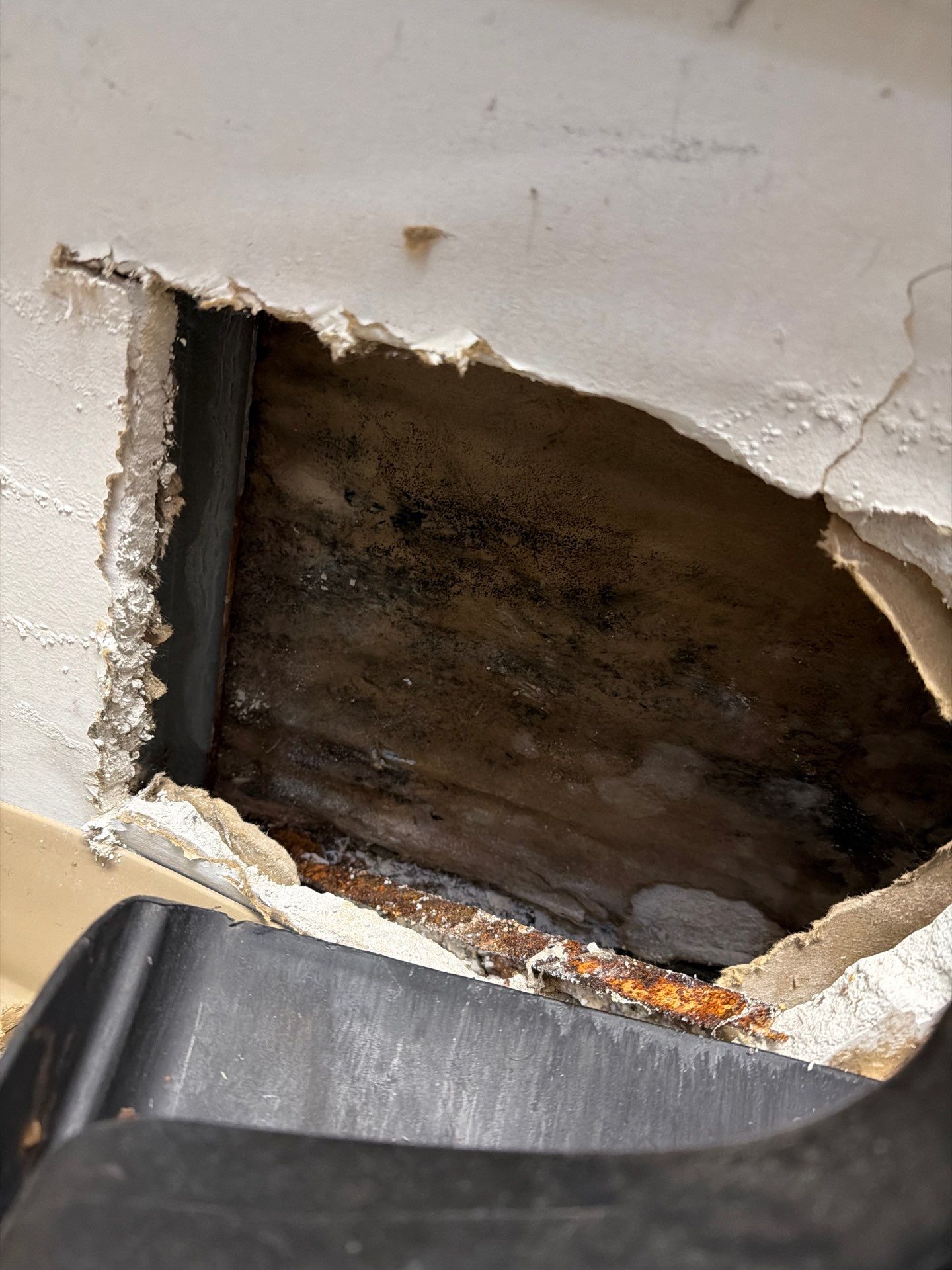
What is mold air testing and how does it actually work?
Air sampling pulls a measured volume of air through a spore trap cassette for a set number of minutes. The cassette traps any mold spores floating in that air, and a laboratory analyst counts them under a microscope. The results come back as spores per cubic meter, broken down by genus such as Aspergillus, Penicillium, Stachybotrys, or Cladosporium.
One sample tells you almost nothing by itself. That is the part most homeowners do not realize. Air testing requires comparison samples, usually one or two indoor samples paired with an outdoor control taken the same day. The outdoor sample establishes the normal background spore load for your Sand Creek Woods neighborhood at that hour, in that weather. Indoor counts are then compared against outdoors to decide whether something abnormal is happening inside.
The pump itself is calibrated to draw a specific volume, typically 15 liters per minute for five to ten minutes depending on the suspected contamination level. Before sampling, the technician documents temperature, relative humidity, HVAC status, and recent activity in the space, because all of these factors influence spore counts. Slamming a door, vacuuming, or even walking across carpet right before a sample is collected can artificially inflate the numbers and produce misleading results.
Why would you test before remediation starts?
Pre remediation testing serves three purposes. First, it confirms whether suspected mold growth is actually elevating airborne spores in the living space, which matters if occupants are reporting symptoms but visible growth is limited. Second, it documents the starting condition for insurance claims or real estate disputes. Third, it helps the remediator scope containment and engineering controls, because high airborne counts of certain species change how aggressively we isolate the work area.
That said, pre testing is not mandatory in every job. If we can see active mold growth on drywall behind a kitchen sink after a slow leak, we already know remediation is warranted. Spending several hundred dollars to confirm what your eyes have confirmed is not always a good use of your budget. We talk through this honestly during the free assessment so you can decide. For context on how moisture leads to growth in the first place, see our breakdown of how fast mold grows after water damage.
What does air testing typically cost in Sand Creek Woods?
Pricing varies by the number of samples and the lab turnaround you choose. A basic clearance package with one outdoor control and two indoor samples at standard turnaround generally runs between 350 and 600 dollars through an independent assessor. Larger homes with multiple affected zones may need four to six indoor samples, which pushes the total higher. Rush 24 hour analysis adds roughly 50 percent on top of standard lab fees.
When Sand Creek Woods Water Restoration receives an emergency call, we dispatch a crew within 2 hours to assess the situation and walk you through whether testing makes sense for your specific scenario. We would rather lose a testing referral than recommend an expense that does not serve your actual goal, which is a clean, dry, healthy home you can trust.
How long does the whole testing process take?
Sample collection on site usually takes under an hour for a typical residential job. The samples ship overnight to the lab, and standard turnaround is two to three business days. Rush analysis at 24 hours is available for an upcharge if you have a closing date or insurance deadline.
Pre testing should be scheduled before any containment is built, because building containment changes the air dynamics. Post testing happens after the air scrubbers have run their dwell period, typically 24 to 48 hours after physical remediation finishes, with the containment still in place.
Why is post remediation testing the more important one?
Post remediation verification, often called clearance testing, is where air sampling earns its keep. After our crew has removed contaminated materials, HEPA vacuumed the cavity, wiped surfaces with an appropriate antimicrobial, and run air scrubbers inside containment for the recommended dwell time, an independent third party tests the air to confirm the space matches or beats outdoor background levels.
The reason this matters is that mold remediation is not visually obvious when it succeeds. You cannot look at a stud bay and see whether residual spores are present. Clearance testing gives you and any future buyer documented proof that the work returned the space to a normal fungal ecology. Without it, you have a verbal assurance and nothing else.
Clearance results also protect the homeowner if symptoms persist after the project closes. If occupants continue reporting headaches or respiratory irritation weeks later, a passing clearance report points the investigation toward other potential sources such as dust mites, pet dander, VOCs from new materials, or a secondary moisture problem in an unrelated area. Without that baseline, every lingering complaint gets blamed on the original remediation whether it deserves the blame or not.
When can you skip air testing entirely?
Small isolated growth under 10 square feet, caused by a known and corrected moisture source, often does not require either pre or post testing under S520 guidelines. A bathroom ceiling with surface mold from a missing exhaust fan is a common example. We remove the affected drywall, address the moisture, and verify visually and with moisture meters that the cavity is dry.
Testing becomes valuable when the affected area is large, when sensitive occupants live in the home, when insurance is involved, or when the property will change hands. For commercial properties and rental units in Sand Creek Woods, we almost always recommend clearance testing because liability exposure is higher. Our commercial mold remediation projects routinely include third party verification as part of the protocol.
What do the numbers on the lab report mean?
Reports list spore counts per cubic meter for each genus identified. There is no federal standard for acceptable indoor levels, which surprises people. Instead, the interpretation is comparative. Indoor counts that are similar to or lower than the outdoor control, with no marker species like Stachybotrys or Chaetomium that should not be airborne indoors, generally indicate a passing result.
Red flags include indoor counts substantially higher than outdoors, indoor species that do not appear in the outdoor sample, or the presence of water damage indicator species. A good lab narrative explains these patterns in plain English. We sit down with you and the report so you understand what you are looking at. If the underlying issue was a plumbing failure or chronic leak, our writeup on signs of hidden water damage can help you spot the next one earlier.
Who should perform the testing and why does independence matter?
The remediator and the tester should not be the same company. This is an industry ethics standard, and we follow it strictly. Sand Creek Woods Water Restoration performs the remediation, and a separate certified indoor environmental professional collects the clearance samples and submits them to an accredited lab. If we tested our own work, the results would carry no weight with insurers, attorneys, or buyers.
When you hire a Sand Creek Woods contractor who insists on doing both, that is a warning sign. Ask for written separation between the remediation firm and the testing firm. A reputable remediator will welcome the oversight because clean results validate the workmanship. The lab itself should hold AIHA EMLAP accreditation, which confirms the analysts are proficient and the chain of custody is documented. Without accreditation, the report carries little weight in a dispute.